
















A bubble on your flat roof is not just an eyesore. It is a sign that moisture or air has gotten trapped beneath the surface, and if you leave it alone, it will eventually crack, let in water, and turn into a much bigger problem. The good news is that flat roof bubble repair does not always require a contractor. With the right tools, a free afternoon, and a clear set of steps, most homeowners can handle this repair on their own and save a significant amount of money in the process.
This guide walks you through exactly what causes roof bubbles, what materials you need, and how to fix them properly so the repair actually holds.
What Causes Bubbles on a Flat Roof?
Before you start any flat roof bubble repair, it helps to understand why the bubble formed in the first place. Flat roofs trap moisture more easily than pitched roofs because water sits on the surface longer instead of running off quickly.
When moisture gets underneath the roofing membrane, whether from a small existing crack, poor installation, or condensation buildup, the heat from the sun turns that moisture into vapor. The vapor pushes upward and lifts the membrane, creating the bubble you see.
Air pockets from poor adhesion during original installation can also cause bubbles. In both cases, the membrane separates from the substrate below, and that separation weakens the roof over time.
Important: If the bubble is large (wider than 12 inches), if there are multiple bubbles clustered together, or if you notice soft or spongy spots around the area, the damage may go deeper than the surface layer. In those cases, calling a professional is the safer choice.
Tools and Materials You Need
Gathering everything before you climb onto the roof saves time and reduces the risk of leaving a half-finished repair exposed to the weather. Here is what you need for a standard flat roof bubble repair job.
- Utility knife or roofing knife
- Roofing membrane patch or matching cap sheet
- Roofing adhesive or bitumen-based sealant
- Roofing nails or screws (for felt or built-up roofs)
- Putty knife or trowel
- Wire brush or sandpaper
- Roofing fabric or reinforcement mesh
- Lap sealant or roof coating
- Chalk line or marker
- Safety gloves, non-slip footwear, and safety glasses
The specific materials depend on your roof type. EPDM rubber roofs need EPDM-compatible adhesive and patch kits. TPO roofs require heat-welding or TPO-specific tape. Modified bitumen or built-up roofs work well with bitumen adhesive and cap sheet patches. Check your roof type before purchasing anything.
Step-by-Step Flat Roof Bubble Repair Process
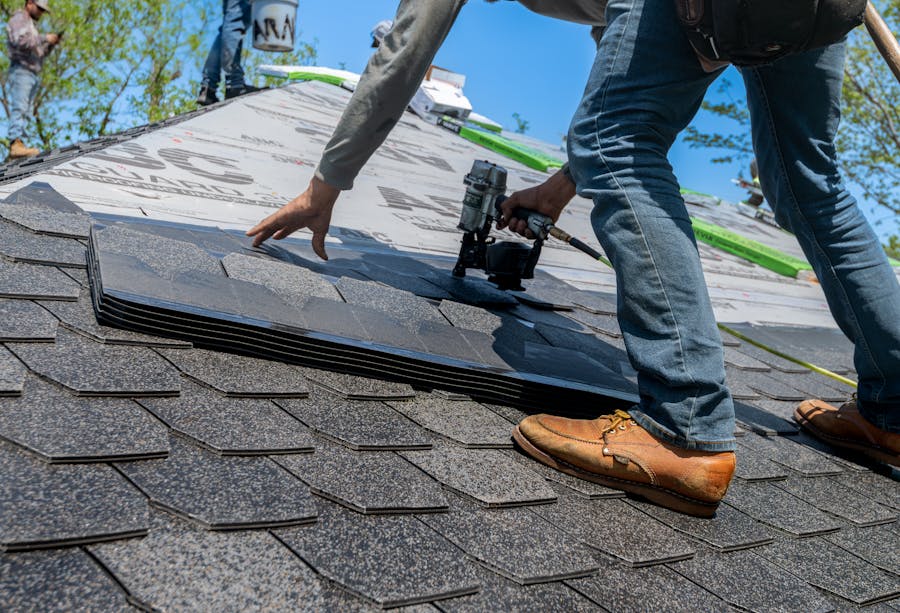
Follow these steps carefully. Rushing any part of the process leads to a repair that fails within one season.
- Choose the right day. Work on a dry day with mild temperatures, ideally between 50°F and 85°F. Cold temperatures make adhesives less effective, and wet conditions prevent a proper seal from forming.
- Clean the area around the bubble. Use a wire brush or sandpaper to remove dirt, loose debris, and any flaking material around the bubble. A clean surface is critical for adhesion. Wipe the area down with a dry cloth after brushing.
- Cut open the bubble carefully. Use a utility knife to make two cuts in an X pattern directly over the center of the bubble. Peel back the four flaps gently without tearing them. You need those flaps intact to fold back down later.
- Remove moisture and let it dry. If you see moisture inside, blot it out with a dry cloth. Let the area sit in the sun for 30 to 60 minutes until it is completely dry. Applying adhesive over damp material is one of the most common flat roof bubble repair mistakes homeowners make.
- Apply roofing adhesive under the flaps. Spread a generous, even layer of roofing adhesive under each flap using a putty knife or trowel. Make sure the adhesive reaches all the way to the edges of each flap so no air pockets remain.
- Press the flaps firmly back down. Press each flap back into place and hold it down with firm pressure for at least one to two minutes. Work from the center outward to push any trapped air out to the edges.
- Nail or screw the edges if needed. On built-up or felt roofs, you can add roofing nails along the cut edges for extra hold. Space them about two inches apart and make sure each nail head sits flush with the surface.
- Cut and apply a patch. Cut a patch from your roofing membrane or cap sheet that extends at least three inches beyond the bubble in every direction. Apply adhesive to the back of the patch and press it firmly over the entire repaired area. Smooth it from the center outward to remove air.
- Seal all edges with lap sealant. Run a bead of lap sealant along every edge of the patch. This step prevents water from getting under the patch and is the final line of defense against future leaks.
- Inspect after 24 hours. Check the repair the next day once everything has fully cured. Press gently around the patch to confirm it is firmly bonded. Look for any lifted edges or gaps and reseal if needed.
Pro Tip: After the repair cures fully, apply a coat of reflective roof coating over the patched area. This adds an extra layer of waterproofing and slows down UV degradation, which extends the life of your repair significantly.
DIY vs. Contractor: When Does Each Make Sense?
Not every flat roof bubble repair situation is the same. Here is a clear breakdown to help you decide when the DIY route works and when you should call in a professional.
| Situation | DIY Repair | Call a Contractor |
|---|---|---|
| Bubble Size | Small, under 12 inches | Large or multiple bubbles |
| Number of Bubbles | One or two isolated spots | Clusters across the roof |
| Roof Age | Under 10 years old | 15+ years, near end of life |
| Moisture Under Membrane | Minor, dries quickly | Heavy moisture or wet insulation |
| Surrounding Surface | Firm and solid | Soft, spongy, or crumbling |
| Active Leak Inside Home | Only if source is confirmed | Yes, get professional assessment |
| Roof Type | Built-up, modified bitumen | EPDM or TPO, needs correct tools |
| Budget | Low cost, materials only | Higher cost but full warranty |
| Your Comfort Level | Confident with tools and heights | Unsure or no prior experience |
Common Flat Roof Bubble Repair Mistakes to Avoid
Even homeowners with good intentions make avoidable mistakes during flat roof bubble repair. Knowing what not to do is just as important as following the right steps.
Skipping the drying step is the most frequent error. Sealing over damp material traps moisture inside, and the bubble comes back within weeks. Always wait until the surface is bone dry before applying any adhesive or patch.
Using the wrong adhesive for your roof type is another common problem. Not all roofing adhesives are compatible with all membrane types. Using a bitumen-based product on a TPO roof, for example, can actually damage the membrane and make the problem worse.
Cutting the patch too small is a mistake that shows up quickly. A patch that barely covers the bubble has very little bonding surface area and lifts at the edges fast. Always go at least three inches beyond the damaged zone on every side.
Finally, skipping the lap sealant on the patch edges leaves the repair vulnerable. Water finds its way under unsecured edges, especially during heavy rain. That thin bead of sealant is what turns a temporary fix into a lasting repair.
How Long Will the Repair Last?
A properly done flat roof bubble repair can last anywhere from five to ten years depending on the materials used, the quality of the patch job, and how well you maintain the roof afterward. Annual inspections in spring and fall help you catch new bubbles early before they grow into serious damage.
If you find yourself making the same flat roof bubble repair every year in the same spot, that is a signal that the underlying issue goes deeper than the surface. At that point, a professional evaluation of the full membrane and insulation layer makes more sense than repeated patching.
Final Takeaway
Flat roof bubble repair is a manageable DIY job when the damage is small and caught early. Clean the surface, dry it completely, apply the right adhesive, patch generously, and seal every edge. Follow those steps and your repair will hold through multiple seasons. Skip any one of them and you will be back on the roof sooner than you planned.