


















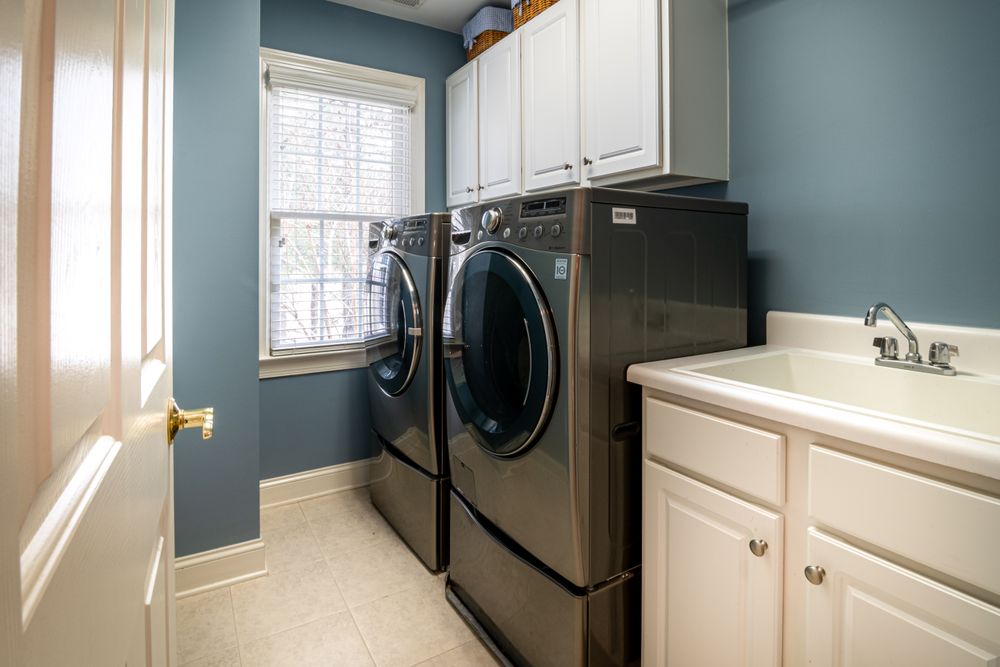
Laundry rooms are finally getting the design attention once reserved for kitchens, bathrooms and highly organized pantries. It makes sense. This is a room many households use several times a week, yet it is often left with builder-grade shelving, harsh lighting and a collection of detergent bottles balanced wherever they happen to fit. Upgrading the space can make everyday chores easier while adding another attractive, functional room to the home. You do not necessarily need additional square footage, either. Better appliances, smarter storage and a few deliberate design decisions can completely change the experience.
Give Everything a Home
Storage is one of the easiest ways to make a laundry room feel less utilitarian. Instead of keeping detergent, stain removers and cleaning supplies exposed, use cabinets or shelving to create dedicated places for frequently used items. Closed cabinetry hides visual clutter, while open shelves work well for attractive containers, baskets and supplies that need to stay within reach.
Think vertically if floor space is limited. Cabinets above a washer and dryer can turn previously unused wall space into valuable storage. A narrow rolling cart may fit between appliances, while hooks can hold reusable bags, cleaning tools or garments waiting to be steamed.
A countertop is another worthwhile addition when the layout allows it. Having a proper surface for folding clothes prevents clean laundry from migrating to the bed or dining table, where it has an uncanny ability to remain for the next three business days.
Create a Better Workflow
A useful laundry room should follow the natural progression from dirty clothes to clean ones. Hampers or divided baskets near the entrance make sorting easier, while the washer and dryer should have enough surrounding space to load and unload without requiring gymnastics.
Consider what happens after clothes leave the dryer, too. A hanging rod provides somewhere for shirts and delicate pieces that should not be folded. A wall-mounted drying rack can handle items that need to air-dry without permanently occupying valuable floor space. If ironing or steaming happens regularly, storing those tools nearby eliminates unnecessary trips through the house.
Lighting deserves attention as well. Bright, even illumination makes it easier to identify stains, sort colors and see whether that mysterious mark actually disappeared in the wash. Task lighting above a folding surface can be particularly useful in rooms without much natural light.
Upgrade Aging Appliances
Older appliances can dictate the entire laundry routine when capacity, cycle options or reliability no longer suit the household. Replacing them can be one of the biggest investments in the room, but it can also change the way the space functions. Before shopping, measure the available width, depth and door clearance carefully, especially when considering larger machines or front-loading models.
For households that want new appliances without covering the entire purchase upfront, it may be possible to take advantage of pay in four plans and other ways to get a lease-to-own washer and dryer set. Compare the total cost, payment schedule, fees and ownership terms rather than looking only at the size of each payment.
Appliance placement can influence the design around it. Front-loading machines may allow for a countertop above them, while certain layouts can accommodate stacked units and free up space for cabinetry, a utility sink or additional storage.
Choose Materials for the Room
Laundry rooms deal with water, humidity, detergent spills and occasional wet clothing, so finishes should be selected for more than appearance. Flooring, paint and cabinetry materials should be suitable for damp spaces, particularly in rooms where ventilation is limited or laundry is frequently hung to dry.
Tile and other water-resistant flooring options can be practical because spills are easier to address than they would be on carpet or moisture-sensitive materials. Washable paint is another sensible choice around appliances and utility sinks, where splashes and marks are more likely.
This does not mean the room needs to look clinical. Patterned tile, wallpaper chosen appropriately for the environment, painted cabinetry and distinctive hardware can introduce personality. Even a small laundry closet can benefit from a color or pattern you might hesitate to use across a larger room.
Make It Feel Finished
Decorative details are what move a laundry room from the utility zone to an intentional part of the home. A washable runner can soften the room, while baskets made from matching materials reduce visual clutter. Artwork, attractive hardware and a cohesive color palette make the space feel connected to the rooms around it.
Just resist decorating away useful workspace. A folding counter covered with plants, frames and accessories may photograph beautifully, but it becomes frustrating when a basket of towels arrives. Leave enough open surface area for the room to perform its actual job.
The laundry room may never become everyone’s favorite place to spend Saturday afternoon, but it does not have to feel forgotten. Improve the storage, workflow, appliances and finishes, and an ordinary utility room can become one of the hardest-working and best-looking spaces in the house.