

















Are you choosing a floor covering for a commercial facility? Then you have to maintain a delicate balance between aesthetics, durability, and budget. Whether you are designing a large logistics warehouse or calculating the costs of opening a stylish tattoo parlor in a quiet town, their floors will suffer from daily loads.
Previously, ceramic tile or linoleum was the top choice, but now it is no coincidence that architects are switching to stained concrete. In this material, we will look at the features of this floor covering and find out why it is becoming the new gold standard.
What is stained concrete, and how does this technology work?
Do you think that stained concrete is just a gray screed covered with a thin layer of paint? And that it will “live” for no more than a year? In reality, it is an ultra-strong material, the properties of which are formed at a deep chemical level. Depending on the desired visual result, you can choose the appropriate technology.
Integral coloring in the mass
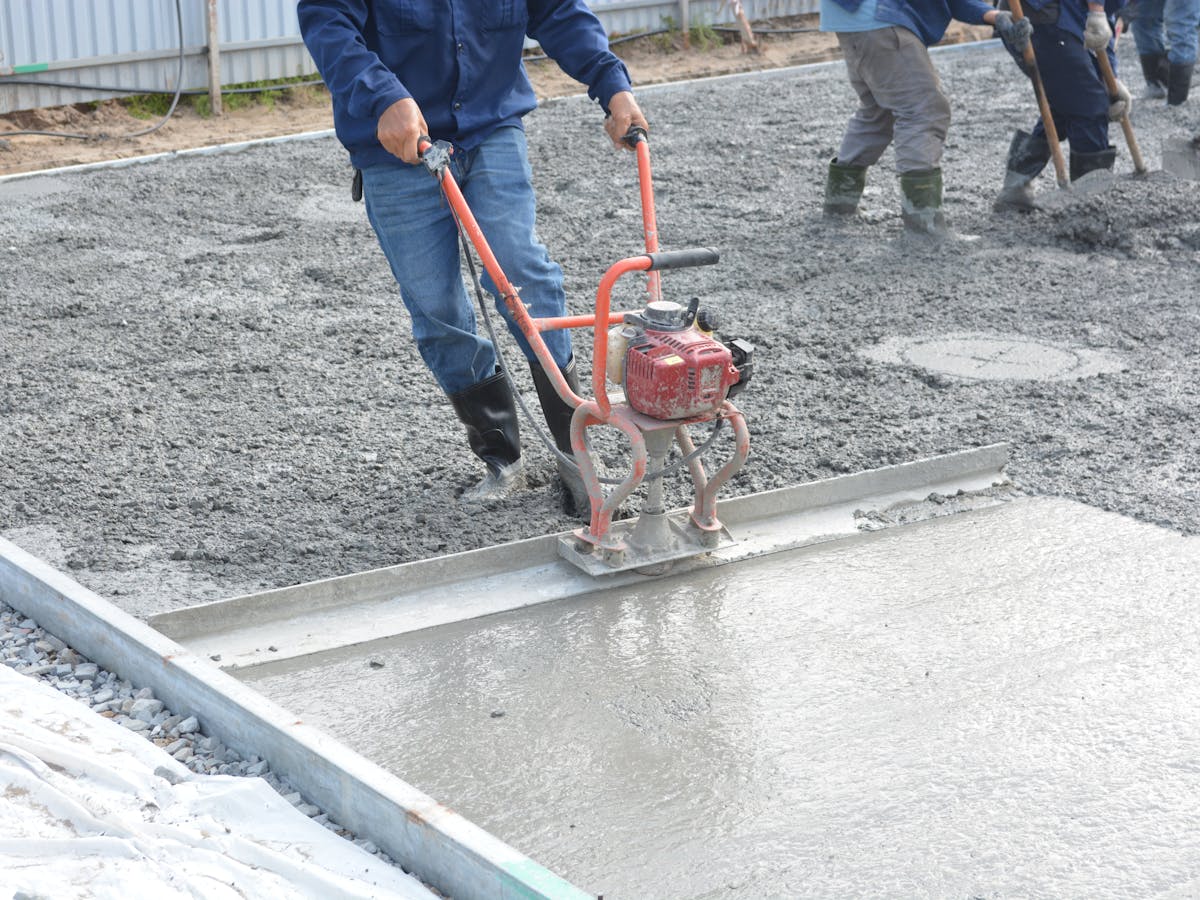
This method involves adding liquid or powder pigments directly into the concrete mixer even before the screed is poured. The main advantage is a rich and uniform color. Even if the floor surface gets a deep chip during operation, the color will remain the same as at the beginning.
Acid etching and surface staining
Acid stains penetrate deep into the pores of the concrete and enter into a chemical reaction. Thanks to this, the surface gets a unique color with natural tints (it can imitate marble or natural stone). Such a coating never peels off.
Comparison of stained concrete with other commercial coatings
To understand the real value of the material, it must be considered exclusively in the context of direct competitors in the construction market. Here are the main competitors that stained concrete has left behind:
- Porcelain stoneware tile. The material is very hard but very brittle. The main problem is the presence of grout lines (seams). Dirt and bacteria collect in them.
- Epoxy self-leveling floor. Creates a perfectly flat coating but is absolutely not breathable. If the concrete base pulls moisture from the ground, the epoxy resin will inevitably blister and peel off in pieces.
- Commercial vinyl. Such linoleum is relatively cheap but subsequently requires constant costs for waxing and polishing. It is easily dented under the weight of racks or heavy chairs.
Against the backdrop of these alternatives, stained concrete appears to be a successful choice for business. It forms an absolutely monolithic plane without seams. The coating is not afraid of sunlight, freely passes water vapor, and guarantees decent resistance to mechanical damage.
Key advantages of stained concrete for business
Investments in infrastructure must pay off with flawless operation. That is why the choice in favor of concrete is based on the following economic and practical factors:
- Extreme durability. A properly treated slab will serve for decades without losing its properties.
- Economic feasibility. Using the existing rough screed as a topcoat significantly saves money on buying glue and tiles and paying for the installers’ work.
- High hygiene. The absence of seams and pores sealed with varnish prevents bacteria from multiplying. Also, it is easy to wash dirt off such a floor.
- As a result, you get a strong floor that is easy to care for, withstands high daily loads, and at the same time has a premium look.
However, to get all these advantages, you must choose a supplier with a good reputation. Speedway Flooring uses exclusively certified products, so stained concrete turns into a profitable investment in comfort and durability. Remember, a properly designed and reliably protected stained concrete floor will work for your business’s reputation without any complaints.