
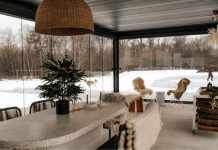












Winter weather can make many outdoor areas difficult to use. Lower temperatures, cold winds, rain, and snow often push homeowners indoors for several months. However, a well-designed pergola can remain useful throughout the winter with the right improvements.
An aluminum pergola with a powder coat finish already provides a durable structure for outdoor living. Homeowners can improve winter comfort by adding protection from wind and moisture, installing suitable heating, choosing warm furnishings, and preparing the structure for snow and ice.
The main goal is to create a sheltered area that feels comfortable without trying to heat the entire outdoor environment. A few practical changes can help turn a summer pergola into a useful outdoor living area during colder months.
“A year-round pergola is about creating a microclimate,” observes Anas Zandaki, Director of PERGOLUX North America. “You need it to block wind, manage moisture, and add focused warmth. With that in place, you can comfortably spend time outside even when the air is crisp.”
Weatherproof a motorized aluminum pergola kit with covers and windbreaks
Good weather protection starts with the roof. A motorized louvered roof gives homeowners more control over changing winter conditions. They can open the louvers during sunny periods to allow natural light into the space. They can also tilt them to improve airflow or close them when rain or snow begins.
A proper drainage system is also important during winter. Water from rain or melting snow needs a clear path away from the covered area. Without effective drainage, water may collect around the edges, drip onto furniture, or freeze near walking areas.
Built-in drainage systems can direct water through the pergola structure and away from the main seating area. This helps keep the floor more comfortable and reduces unwanted dripping during wet weather.
Wind protection can make an even greater difference. Even moderate wind can make cold temperatures feel much lower. Adding side panels, screens, or glass walls helps reduce direct exposure to cold air.
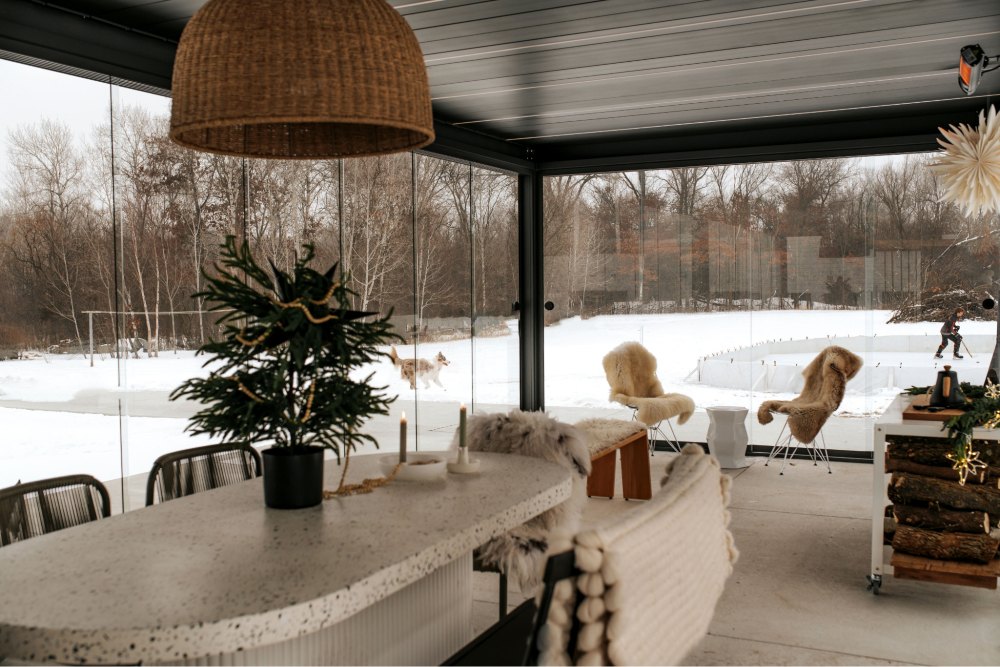
Tempered glass panels work well for homeowners who want wind protection without blocking the view or reducing natural light. Sliding glass doors can also create a more enclosed outdoor space while allowing easy access.
Homeowners should pay attention to details such as drainage channels around sliding tracks. Water that collects in these areas may freeze when temperatures fall. Proper drainage helps keep doors working smoothly and reduces moisture problems.
Seals and brush systems around sliding panels can also limit drafts. These small features help create a more stable environment inside the pergola.
Add safe and effective heat to a luxury pergola with heaters and insulation for outdoor living
Once homeowners reduce wind exposure, outdoor heating becomes much more useful. Instead of trying to warm all the surrounding air, they can focus heat on seating areas where people spend most of their time.
Electric infrared heaters are popular for pergolas because they deliver directional warmth that feels similar to sunshine on the skin. They also don’t rely on trapping hot air that will immediately drift away. The PERGOLUX Heater is an example of an electric infrared option in the 1500W-2000W range designed to snap into the pergola’s gutter or beam channels using tool-free SnapFIT technology, making it appealing to those who want to avoid the hassle of drilling into an aluminum frame.
The position of the heater matters. Homeowners should install heaters where they can provide warmth across the seating area without creating uncomfortable hot spots. The heater should also remain clear of fabrics, furniture, curtains, and other materials according to the manufacturer’s safety instructions.
Electrical safety should remain a priority in outdoor spaces. Homeowners should use equipment designed for outdoor conditions and make sure electrical connections have proper weather protection. A qualified electrician can help with permanent installations when needed.
Physical comfort also improves when the pergola has some insulation from cold surfaces. Rugs, upholstered seating, cushions, and blankets can help reduce the cold feeling that comes from stone, concrete, and metal surfaces.
Layer in winter-ready comfort to an aluminum louvered pergola with seating and outdoor rugs
Furniture plays an important role in making a winter pergola comfortable. Deep outdoor seating with thick cushions provides a more relaxing place to sit during colder weather. Homeowners can also add weather-resistant pillows and heavy blankets for extra warmth.
Choosing materials designed for outdoor conditions helps protect the furniture from moisture and temperature changes. Removable cushion covers can also make cleaning and storage easier.
An outdoor rug can improve both comfort and appearance. Concrete, tile, and stone floors often stay cold during winter. A suitable outdoor rug creates a softer surface underfoot and helps define the main seating area.
The rug should use materials that can handle moisture and dry quickly. Homeowners should avoid materials that hold water for long periods because trapped moisture can lead to mildew or damage.
Small tables can make the space more practical. A coffee table provides room for drinks, snacks, books, or other items. Side tables also reduce the need to move between the pergola and the house.
Lighting can improve winter use as well. Since daylight hours become shorter, homeowners may need more lighting during late afternoons and evenings. Warm outdoor lights can provide enough visibility without making the space feel too bright.
Counter snow and ice with a plan for exterior durability and interior storage for creature comforts
A winter pergola needs regular care during periods of snow, ice, and strong winds. Homeowners should understand the snow load and wind limits of their pergola and follow the manufacturer’s instructions during severe weather.
Heavy snow should not remain on the structure longer than necessary if it approaches the pergola’s approved load limit. Homeowners should also keep drainage areas clear so melting snow can move away from the roof and seating area.
Storage makes winter use more convenient. A weather-resistant deck box or storage bench gives homeowners a dry place for blankets, cushions, pillows, and other outdoor items. Easy access makes it simpler to prepare the pergola whenever they want to use it.
Homeowners should also keep walking areas safe. Snow and ice near the pergola entrance can create slippery surfaces. Traction mats can improve grip, while suitable de-icing products can help keep pathways clear. Pet owners should choose products that are safe for animals when necessary.
Regular checks can also help maintain the pergola throughout winter. Homeowners should inspect roof movement, drainage channels, glass tracks, heating equipment, and electrical connections.
With effective wind protection, a responsive roof, targeted heating, comfortable furniture, and proper winter maintenance, a luxury pergola can remain useful well beyond summer. These improvements help create a protected outdoor area where homeowners can relax, spend time with family, or enjoy fresh air throughout the colder season.