















Choosing a bathroom light can become confusing when its label says it is suitable for damp locations. The phrase describes how much moisture a product can handle, but it does not always mean the fixture can take direct water spray. The correct rating protects the fixture, wiring, and anyone using the bathroom daily.
Are Damp-Location Lights Suitable for Shower Areas?
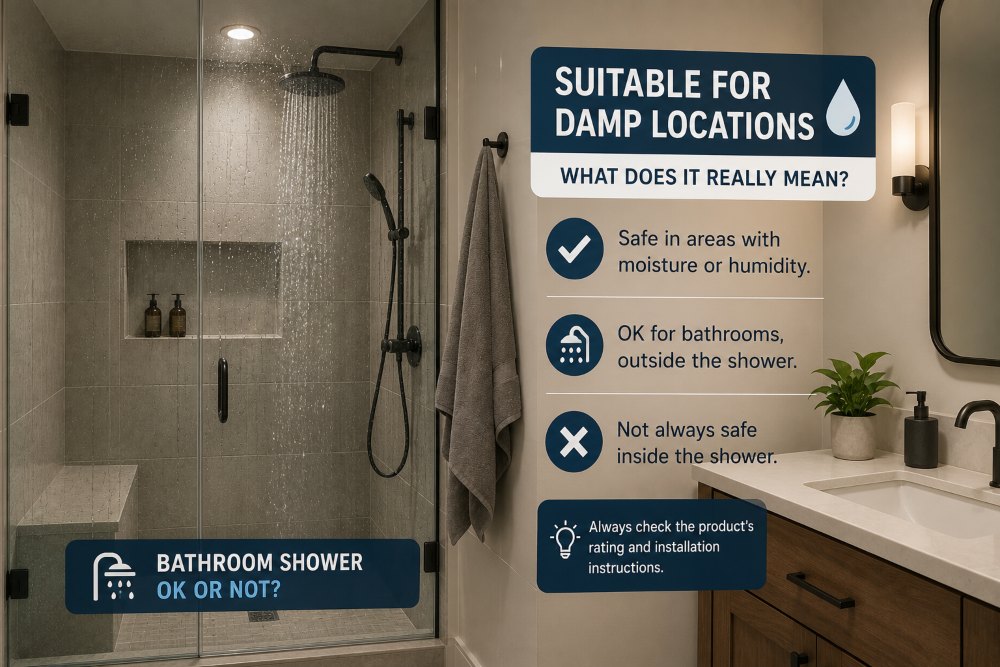
In most cases, a damp-location rating alone does not make a light suitable for a shower. Damp-rated fixtures can handle moisture in the air, mild condensation, and humid conditions. They should not receive direct water unless the manufacturer approves that use.
A shower creates a wet environment. Water can reach the ceiling, trim, and electrical parts. The fixture should carry a wet-location rating when water may touch it. Always check the product label before placing a light above or inside a shower.
What Does a Damp-Location Rating Mean?
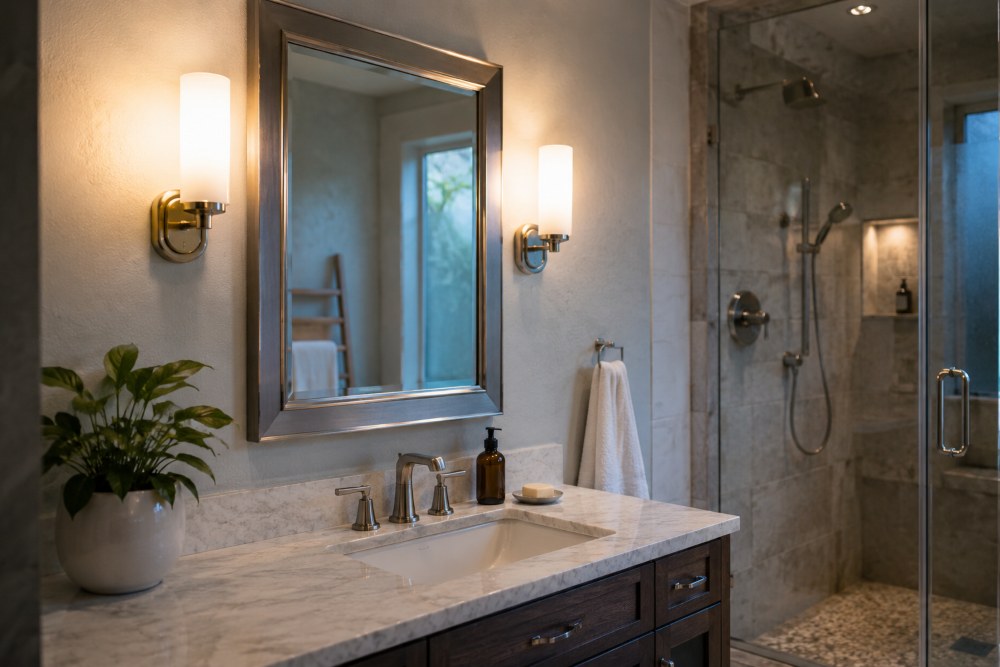
A damp-rated product can operate where moisture exists but water does not directly strike it. These places may include laundry rooms, covered porches, and bathroom areas outside the shower.
The rating shows that the fixture can resist humidity and limited condensation. It does not confirm protection against splashes, dripping water, or shower spray.
Where Damp-Rated Lights Usually Work
Damp-rated lights often work above mirrors, near vanities, or on ceilings away from tubs and showers. They may also suit a ventilated bathroom where steam collects but direct water cannot reach them.
A low ceiling, open shower, or strong showerhead can send water farther than expected. Check the fixture instructions before installation.
What Does a Wet-Location Rating Mean?
A wet-rated fixture offers stronger protection against direct water contact. Manufacturers design and test these products for places where splashes may reach them.
Wet-rated lights provide the safer choice above a shower or bathtub when the fixture sits inside the wet zone. Recessed models often use sealed trim or a protective lens to block moisture from reaching the bulb and wiring.
Wet-rated does not mean waterproof in every situation. Correct installation still matters.
Why the Shower Area Needs Extra Care
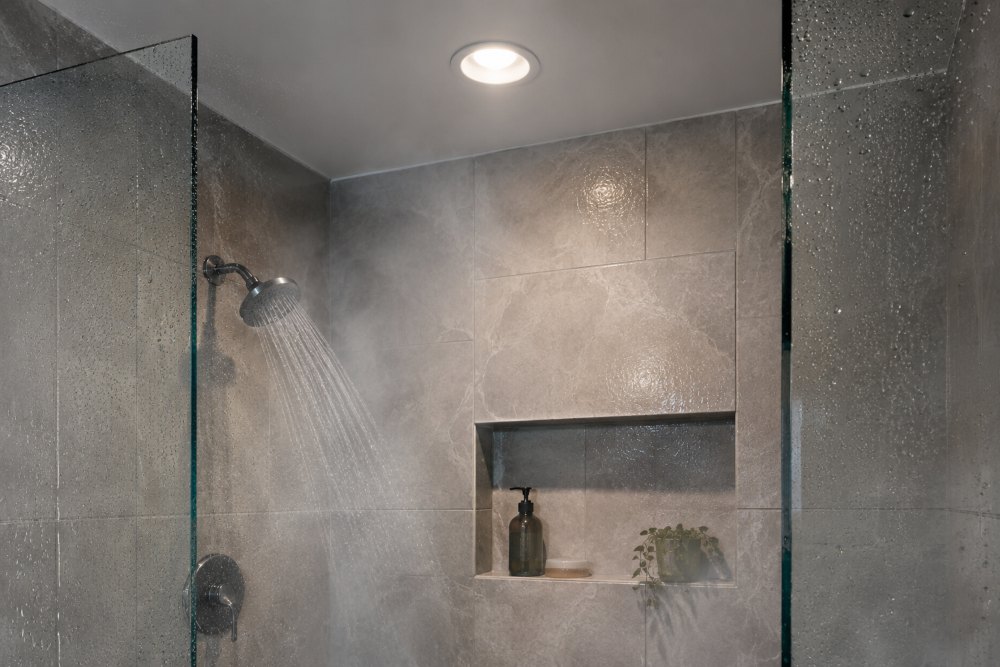
Water and electricity create a serious safety risk. Moisture can enter gaps around a fixture, damage metal parts, and reach wiring. Corrosion may weaken connections and shorten the light’s life.
Warm shower steam can also form droplets around a cooler fixture. A damp-rated light may handle humidity, but direct splashes require more protection.
Homeowners planning a renovation can explore practical layouts and fixture placement through these bathroom design ideas before choosing their lighting setup.
How to Choose the Right Shower Light
Start by checking the packaging. Look for wording such as “suitable for wet locations” or approval for shower use. Do not assume that “bathroom rated” means the same thing.
Check the Fixture Label
If the label only mentions damp locations, keep the fixture away from direct spray. If it lists wet locations, confirm that the installation method suits the shower.
Read the Installation Instructions
The manufacturer may set limits for ceiling height, enclosure type, or distance from water. Follow those instructions because they form part of the product’s safety approval.
Use the Correct Bulb
Choose a bulb that matches the fixture’s wattage, base, and enclosure rating. Some LED bulbs cannot work safely inside sealed fixtures because heat can build up.
Hire a Qualified Electrician
An electrician can review the layout, wiring, ventilation, and local rules. Professional installation also keeps moisture away from electrical connections.
Conclusion
Does Suitable For Damp Locations Mean Bathroom Shower Ok? Usually, the answer is no when the fixture may receive direct water. Damp-rated lights suit humid bathroom areas protected from spray. Shower zones often need fixtures clearly rated for wet locations.
Check the label, follow the installation guide, and consider how far water can travel. Ask a licensed electrician when the rating or location remains unclear.
Frequently Asked Questions
Can I install a damp-rated light above a closed shower?
A closed shower may reduce splashes, but steam and water can still reach the ceiling. Use a wet-rated fixture unless the manufacturer clearly allows the damp-rated model.
Are recessed lights safe inside a shower?
Recessed lights can work in showers when they carry a wet-location rating and use the correct sealed trim. Follow the manufacturer’s directions.
Is an IP rating the same as a damp rating?
No. An IP rating describes protection against solids and water through numbered levels. Damp and wet ratings describe approved installation environments.