














Most people start a bathroom remodel with the fun part. They pin tile ideas, argue over vanity colors, and fall in love with a rain shower head they saw online. The plumbing sits at the bottom of the list, if it makes the list at all.
That order causes trouble. Plumbing decides what you can build, where things can go, and how much the project costs. A few early choices can save you from ripped out tile, rushed substitutions, and a bill that grows halfway through.
Here are the plumbing decisions worth making before you buy a single fixture.
Decide Whether the Layout Is Staying Put
This is the biggest cost driver in most bathroom remodels. Moving a sink a foot or two is usually manageable. Moving a toilet or shower to the opposite wall is a different job.
Drain lines need to slope toward the main stack, and every fixture needs proper venting so it drains smoothly. Shifting a fixture can mean opening floors, cutting joists, and rerouting pipes. The farther you move something, the more work is involved.
If your budget is tight, keep the toilet, tub, and sink roughly where they are. Spend your energy on finishing instead. If you do want a new layout, talk to a plumber before you commit to a design. They can tell you early what is simple and what is expensive.
Measure Before You Shop
Fixtures are not one size fits all. A beautiful toilet that does not fit your space is a very expensive mistake.
Start with the toilet rough in, which is the distance from the finished wall to the center of the drain. Twelve inches is common, but older homes can differ. Measure yours before you order. Check the clearance around the toilet and the sink as well, since many codes call for a minimum amount of open space.
Also measure the vanity wall, the shower or tub opening, and the door swing. Write the numbers down and keep them on your phone while you shop.
Choose the Shower Valve Before the Tile
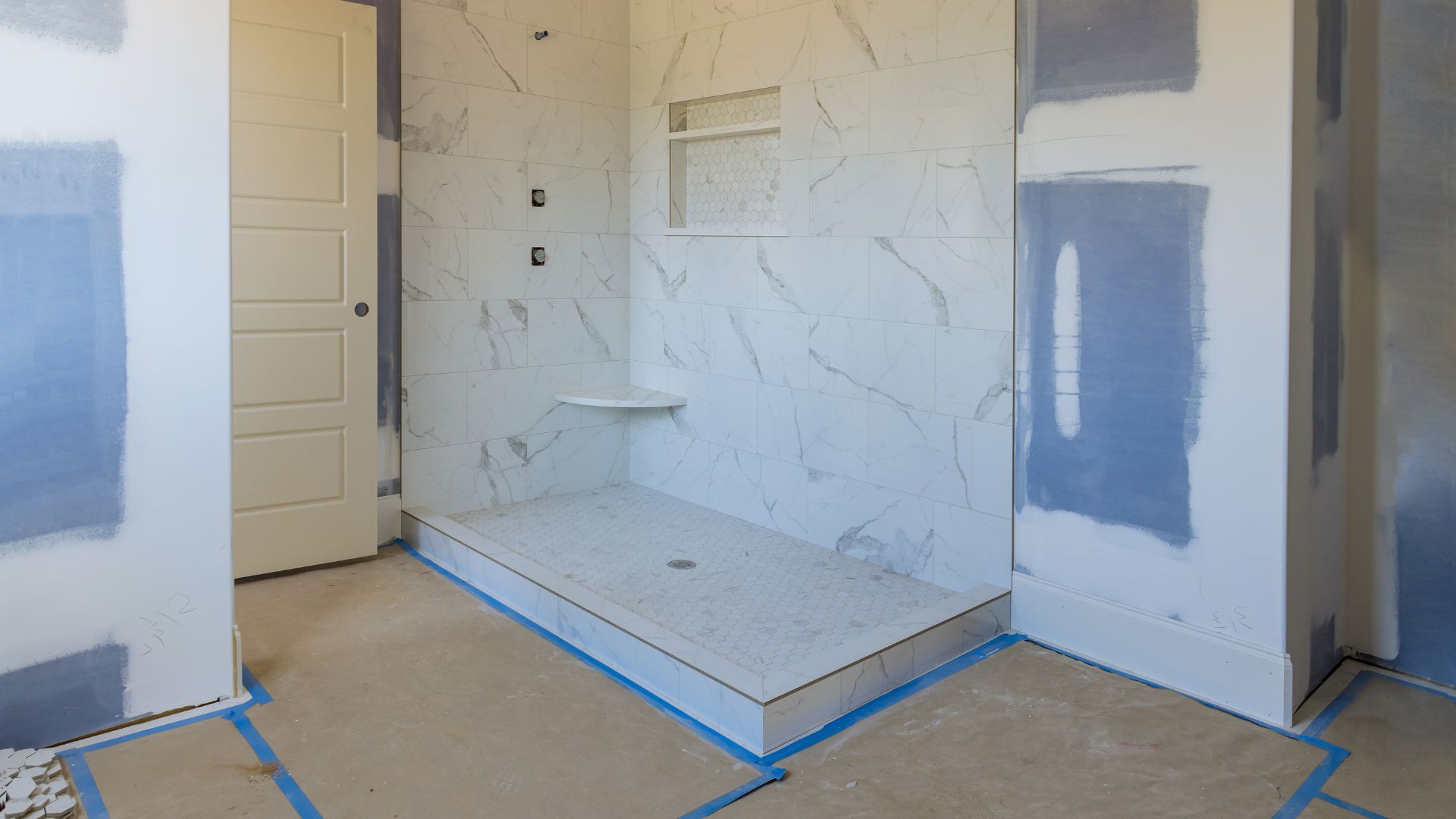
The valve behind the shower wall controls temperature and flow. Once the wall is closed up, it is very hard to change without breaking tile.
Two types are common:
- Pressure balancing valves help keep the water temperature steady when another fixture in the house is used.
- Thermostatic valves let you set a specific temperature and hold it, which some people prefer for comfort and safety.
The valve also determines which trim kits fit it. If you choose a handle you love before you choose a compatible valve, you may be stuck. Pick the valve and trim as a pair, and make sure the valve is installed with an access point so future repairs do not mean demolition.
Think About Water Flow and Your Wish List
Rain heads, body sprays, and handheld wands all sound great. But each one draws water, and your home’s supply has limits.
If you are planning multiple spray outlets, ask whether your supply lines and water pressure can support them. A stunning shower that delivers a weak trickle is not what you had in mind.
The same is true for a large soaking tub. A deep tub takes a lot of hot water to fill. If your water heater is already stretched, you may find yourself with lukewarm water halfway through the bath. It is worth checking early rather than after the tub is in place.
Consider Water Efficiency
An efficient bathroom saves money every month, and the choices are easier than they used to be. The EPA’s WaterSense label identifies products that meet water efficiency and performance standards.
The numbers are specific. WaterSense toilets use 1.28 gallons per flush or less. Showerheads are limited to 2.0 gallons per minute. Bathroom faucets are limited to 1.5 gallons per minute. According to EPA’s WaterSense program, replacing old toilets with WaterSense models can cut toilet water use by 20 to 60 percent, which it describes as nearly 13,000 gallons saved per household each year.
That is real savings with no change in how you use the room. Look for the label when you compare options.
Replace Old Shutoff Valves and Supply Lines
While the walls and vanity are open, check the small parts that nobody sees. Old shutoff valves, also called stop valves, can seize or leak when they are finally needed. Flexible supply lines wear out over time.
Swapping them during a remodel costs little and makes future repairs easier. Every fixture should have its own working shutoff so you can stop the water at that fixture without shutting down the whole house.
If you spot corroded pipes, green stains, or slow leaks while the walls are open, flag them right away. It is far easier to fix them now than after the new tile goes in.
Get Help Where It Counts
Some bathroom work is a great weekend project. Painting, swapping a light fixture, and installing a mirror are all reasonable DIY tasks. Moving drains, changing supply lines, and setting a new valve are not always.
Plumbing mistakes tend to stay hidden until they cause damage. A small leak behind a wall can rot framing for months. For the plumbing portion of the job, most homeowners are better off hiring a professional for faucet, toilet, and shower installation, especially when it involves new rough in work or a valve behind the wall.
Also check whether your local building department requires a permit for the work. Rules vary, and a licensed plumber will usually know what applies in your area.
Test Before You Close the Walls
This step is easy to skip and costly to miss. Before tile, drywall, or a vanity goes in, run the water. Check every connection for drips. Flush the toilet. Let the shower run for several minutes and watch for leaks at the valve and the drain.
If something is wrong, fixing it now takes minutes. Fixing it after the finish work is done can take days.
A Quick Pre Remodel Plumbing Checklist
- Decide whether the layout stays the same
- Measure the toilet rough in and all clearances
- Choose the shower valve and trim together
- Confirm your water pressure and hot water capacity
- Look for WaterSense labeled fixtures
- Replace old shutoffs and supply lines
- Confirm permit rules with your local office
- Test everything before closing walls
Final Thoughts
A bathroom remodel looks like a design project, but it runs on plumbing. The choices you make about layout, valves, and flow shape the whole job. Decide those first, and the fun decisions about tile, color, and style get a lot easier. You will also end up with a bathroom that works as well as it looks.